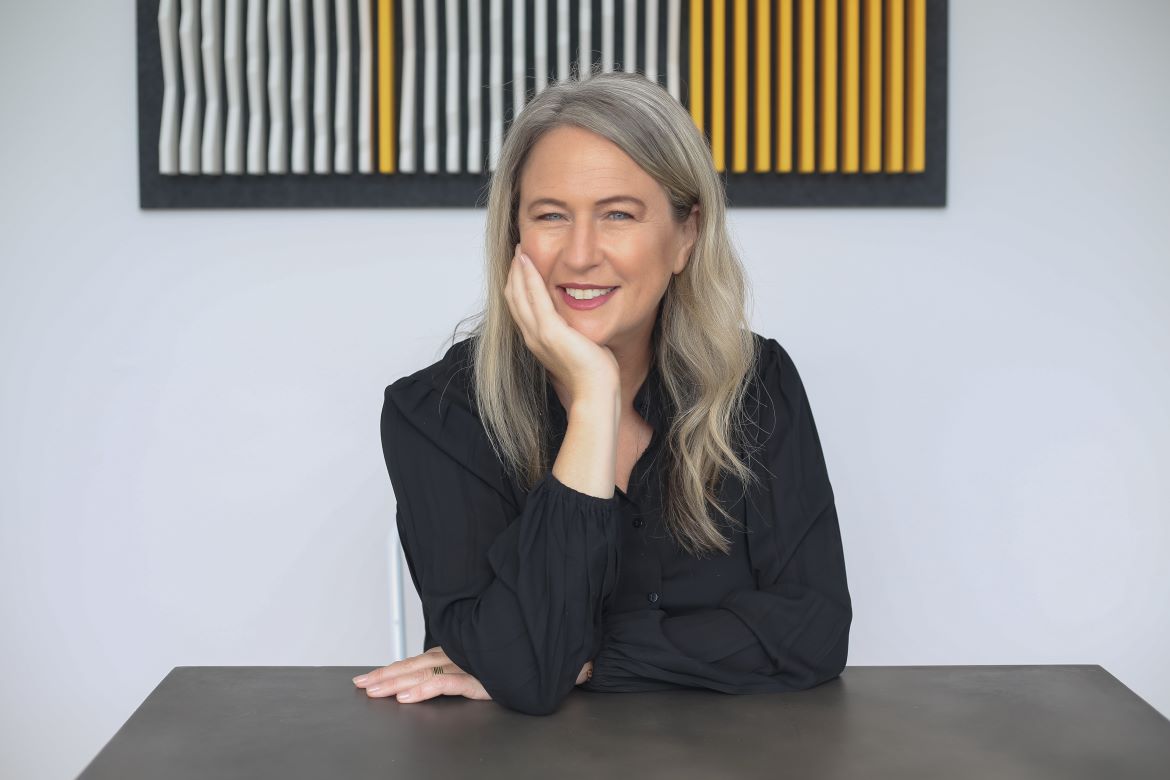
After over a decade of experience in early childhood education, while navigating her own neurodivergence and parenting her autistic PDA son, Chantal Hewitt is helping reshape how families understand autism. Drawing on both lived experience and professional expertise, she challenges traditional, behaviour-focused approaches and advocates for connection-led, neurodiversity-affirming support. Through her podcast and her growing online community, Chantal offers parents compassionate, evidence-informed guidance with a clear mission: to help families move out of survival mode and into understanding, confidence and connection. Here she talks to The Natural Parent Magazine about the passion behind what she does, how she balances work and family life, the challenges she has overcome, and her hopes and dreams for the future.
The passion: What inspired you to set up your business?
Becoming a mother to my third child was the turning point that changed everything. I’d already spent more than a decade working in early childhood education and leadership, supporting children during their most developmental and transformative years, but something inside me was shifting.
Alongside my professional background, I was navigating my own late-identified neurodivergence and parenting my Autistic PDA (Pathological Demand Avoidant, or the kinder – Persistent Drive for Autonomy) son. I saw, first-hand, the profound gaps in understanding that exist across education, healthcare and family support for Autistic children, let alone children and families navigating a PDA profile of Autism. Parents were struggling. Children were misunderstood. And the systems intended to help them simply weren’t designed with neurodivergent brains in mind.
I realised families weren’t receiving the right information at the right time, and many were unintentionally being guided toward behaviouralist approaches that actually increased anxiety, damaged trust and eroded connection.
After experiencing Autistic burnout myself, masking for decades, and juggling parenting my child with different needs alongside full-time leadership roles, my own nervous system gave out. I could no longer sustain the pace, and I no longer wanted to live in survival mode. Everything in me knew: there has to be another way – not just for me, but for the families I cared so deeply about.
So I created it.
My business was born from a mix of lived experience, professional expertise and a deep commitment to protecting the wellbeing of Autistic children and the parents who love them. It exists to give families the kind of support that should have always been available – compassionate, attuned, evidence-informed, and most importantly, grounded in the voices and lived experiences of the Autistic and PDA community.
The launch: How did you start out in the beginning?
It began slowly – tiny seeds planted over the past few years. But the real catalyst came unexpectedly: two weeks of hospital bed rest due to preeclampsia late in pregnancy as I awaited the arrival of my daughter. For the first time in years, I was forced to stop. No school drop-offs. No leadership responsibilities. No rushing. Just silence, stillness and space – and all the feelings I had been outrunning caught up to me.
Sitting in that hospital bed, I opened a blank document and poured everything out: my vision, my frustration with existing systems, my desire to meaningfully support parents and the possibility that maybe, just maybe, I could create something entirely new. Something that supported others on a greater scale that also supported my family’s need for flexibility.
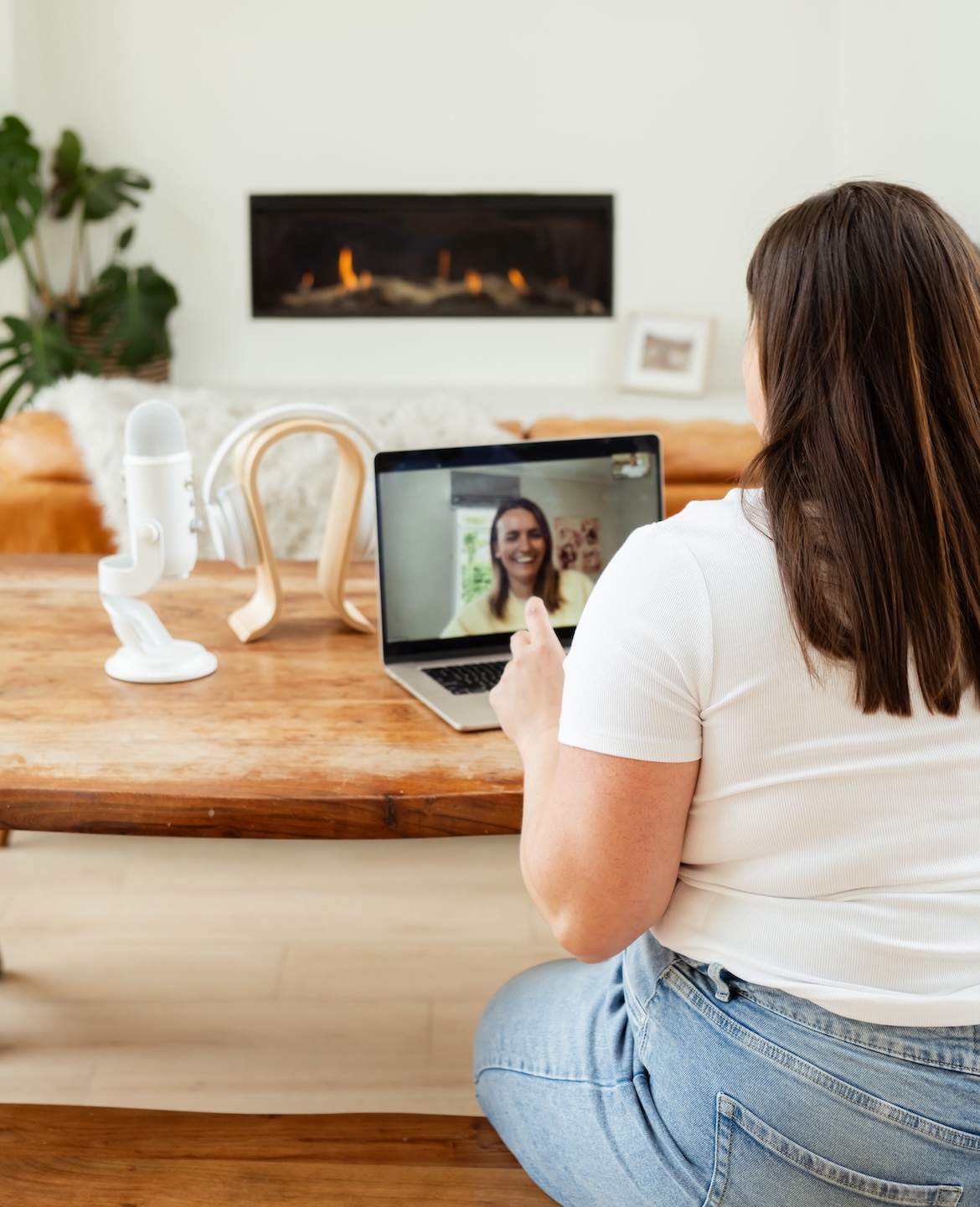
After my daughter was born, I spent her first six months in a rhythm of breastfeeding, navigating postpartum recovery and building the bones of my business between nap cycles and meltdowns and everyday life with three young children. I invested in professional branding, learned the online business world from scratch and created my podcast, Attuned Spectrum, as a way to offer free, accessible support to families.
It felt vulnerable learning publicly, making mistakes openly and trying things I’d never done before… but it also felt deeply aligned.
I knew I couldn’t return to the conventional work patterns that had burned me out for decades. Entrepreneurship, with autonomy, flexibility and values-led decision-making, became the only path that truly supported my nervous system and my children’s needs.
The innovation: What was the biggest breakthrough for you with your business?
My biggest breakthrough wasn’t a single moment; it was a gradual unmasking.
For years, masking allowed me to “function” in systems that weren’t built for me. But it came at an enormous cost. When I finally began seeing my Autistic, PDA and ADHD traits clearly, everything clicked into place.
The realisation that I am allowed to live gently – slowly, intentionally, attuned to my nervous system in order to support my family and many others – became the foundation of my entire business.
That clarity changed everything:
- I stopped trying to be fast, flashy or performative.
- I built offerings around depth, connection and authenticity.
- I embraced the monotropic, hyperfocused strengths of my Autistic brain.
- I leaned into the autonomy and flexibility that my PDA nervous system needs in order to thrive.
- And I committed to grounding my work in the lived experience and collective wisdom of Autistic and PDA adults, alongside evidence-based research that continues to develop with neurodiversity affirming practices at the forefront.
I also recognised that parents aren’t failing; they are being failed by outdated, behaviour-focused interventions still widely funded and recommended. Families deserve approaches that honour and teach neurodiversity, sensory needs, connection-led parenting and emotional safety.
My breakthrough was giving myself permission to work differently, think differently and support families in ways traditional systems simply can’t.
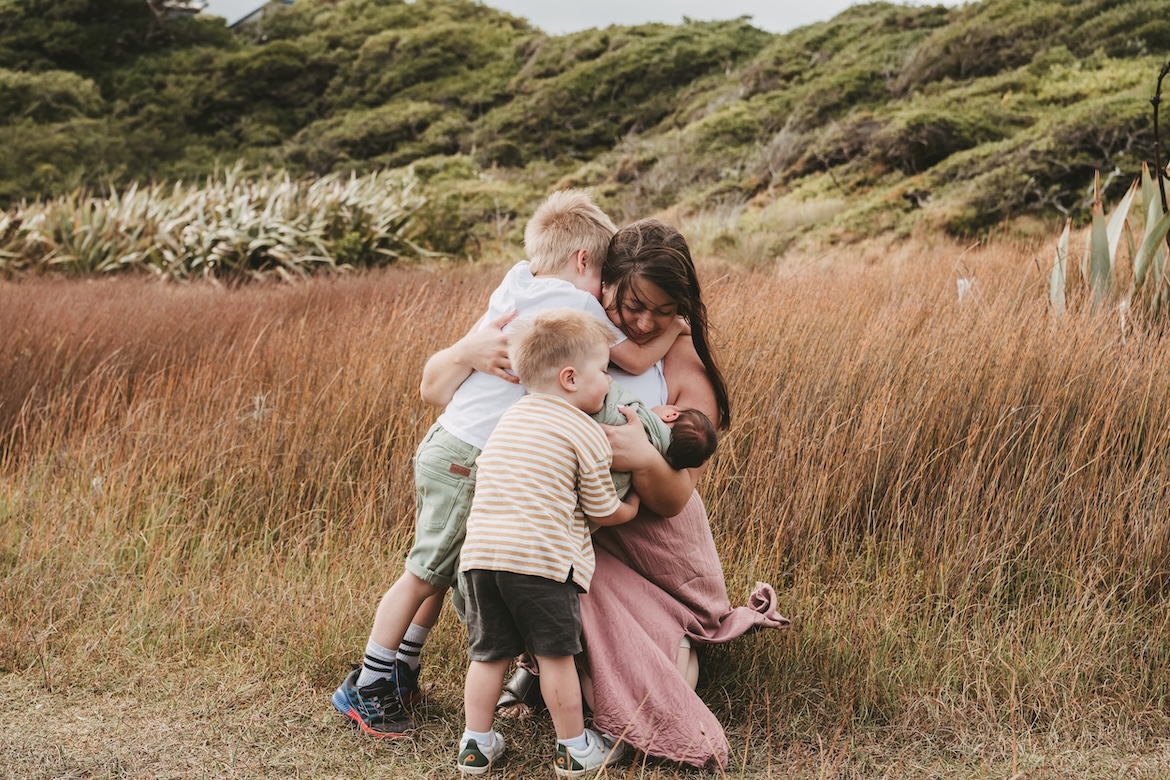
Yin and Yang: How do you balance work and family?
Balancing work and family as a neurodivergent mother of three young children is an ever-evolving process, but values are my compass. I am the primary caregiver while my husband works long hours, so I’ve learned to build my business around:
- Nap windows
- School runs
- Regulation needs (mine + my children’s)
- Flexible, spacious time blocking
- Protecting my nervous system from overload
I no longer force myself to work when I know I’ll be interrupted. Instead, I create focused blocks where my brain can enter that beautiful, hyper-focused flow state that allows me to produce deep, meaningful work.
Our support network – grandparents, my mum visiting from Canada, a nurturing Montessori schooling environment – makes a tremendous difference. But the biggest shift has been releasing the pressure to “do it all”.
I prioritise rest, movement, nourishment and slower days because my children need a regulated parent far more than they need a perfect one. I’ve built a business that honours that reality. Work now complements my life, not the other way around.
I will say, however, that this practice of “balance” does not come easy, and each day it does take a toll that I have to work on supporting.