The story of Jackie Gorman and the movement behind Nurture by Touch®
In a world that often celebrates strength through speed, resilience through endurance and recovery through “bouncing back”, there is a quiet movement unfolding – one that invites mothers to slow down, be held and to recover slowly.
Jackie Gorman, the Founder of Nurture by Touch®, is a Practitioner devoted to restoring an ancient lineage of postpartum care through what she calls Jamu Innate Postpartum Care.
Her work is not simply about massage, wrapping or physical recovery. It is about honouring one of the most profound transitions in a woman’s life: the journey into motherhood with presence, respect and deep support.
For Jackie, this work is both professional and deeply personal.
A Mother’s Experience That Changed Everything
Jackie’s path into postpartum care began not in a clinic or classroom, but in her own home during the vulnerable days after the birth of her son in Singapore, where she lived for almost 6 years.
Her labour had been long and physically demanding with intervention, and that had an impact on her physiologically, emotionally and mentally. Like many new mothers, she returned home feeling exhausted, sore and emotionally overwhelmed. There was no South African or Australian family support around her, and her husband at the time started travelling across Asia when her son was only 4 weeks old. Around 6 weeks postpartum, her mum came across from South Africa to stay for one month, but something still felt missing at a much deeper level.
While living in Singapore, Jackie was introduced to a traditional Jamu practitioner during her antenatal classes – a confinement Aunty called Hana – and during their chats and personal connection, Jackie decided to engage her bodywork of care after the birth of her son.
During her hospital stay of 6 days, she was also exposed to postpartum TCM nutrition with the hospital’s kitchen run by a chef, lactation consultant and 2 TCM nutritionists, which blew her mind, as no cold food, jelly or milo came from that kitchen whatsoever!
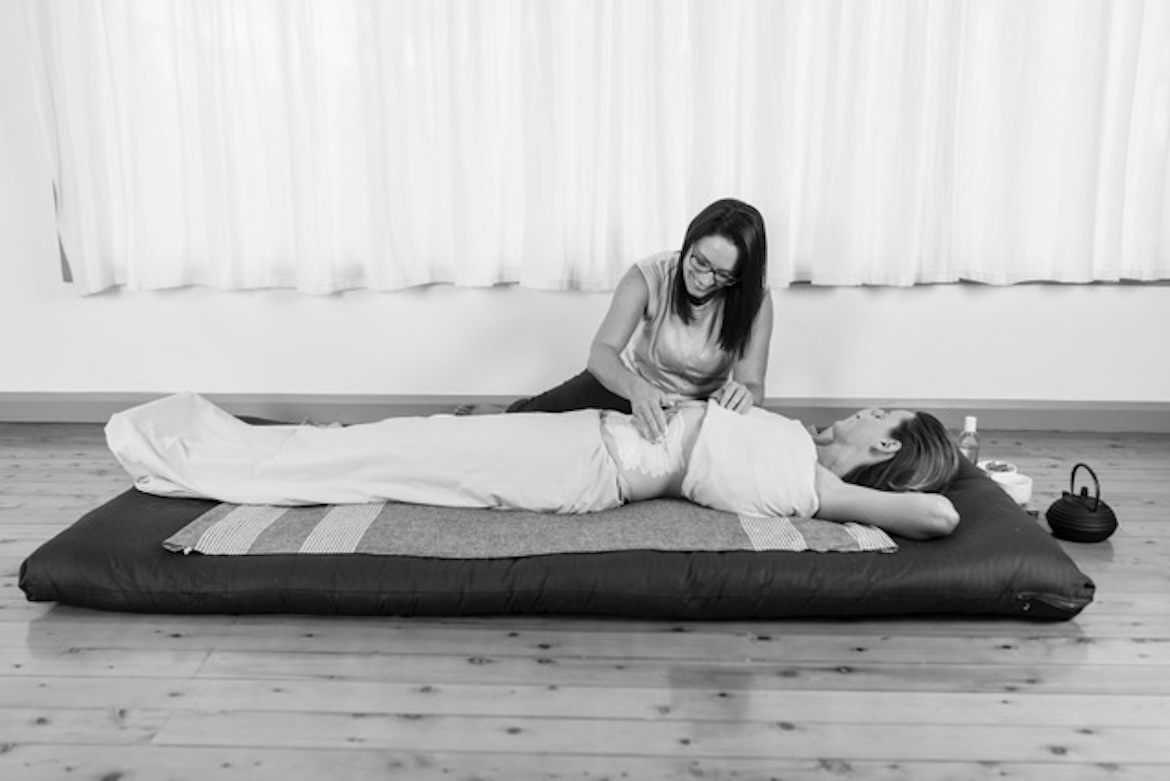
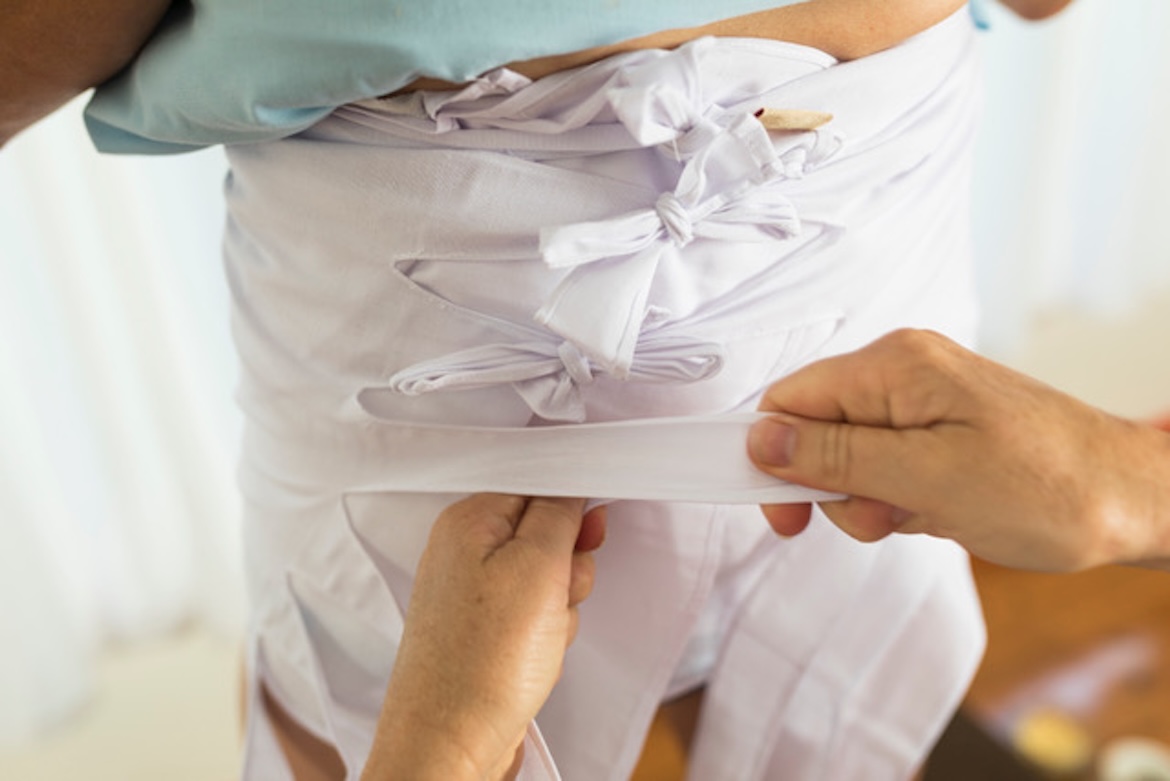
Each visit from Hana brought a gentle rhythm of healing: massage to restore circulation, Jamu abdominal herbs to warm the body and support the involution of the uterus and a careful 3-layer wrapping system to support recovery. But what stayed with Jackie most was not just the physical relief; it was the emotional safety she felt. She was being nurtured and she was being held.
Within days, her pain began to ease, organs started settling back into position and she felt lighter as water retention decreased and the lymph system was activated. Residual lochia was pushed out of her body preventing the build-up of inflammation, her body started to feel stronger and reconnected to her core and lower back. Her confidence returned.
More importantly, she felt seen, supported and held during one of the most vulnerable chapters of her life. That experience planted a seed and a few years later, it would grow into her calling.
Bringing an Ancient Tradition Home
Inspired by the profound impact of her own recovery, Jackie chose to train in the traditional practices of Jamu postpartum care in Singapore and a year later, she headed to Indonesia.
She immersed herself in the philosophy and rituals of Jamu, an ancient system of healing that recognises the fourth trimester as a critical period for physical, emotional and mental recovery after birth.
She engaged Rachelle Garcia Seliga from Innate Traditions in the US and spent 18 months certifying as an Innate Postpartum Care Practitioner. She is currently completing Matriatrics 1&2 with Dr Oscar Serrallach, the neuroscience behind motherhood/matrescence.
These traditions have been practised for generations across many cultures, where families and communities gather around the mother to ensure she rests, heals and regains her strength.
Jackie saw the wisdom in these practices and the gap in modern care. When she returned to Australia, she decided to bring this knowledge home and never returned to corporate life. Not as a trend. Not as a service. But as a restoration of something essential. The Birth of Nurture by Touch.
What began as one practitioner travelling from home to home has grown into a trusted and deeply respected service supporting mothers across Sydney.
In the early years, Jackie spent long days on the road, carrying her wraps, herbs and equipment into family homes. She worked quietly and respectfully, adapting to each household and honouring the rhythms of the mother-baby dyad. Her work was built on relationships, trust and word of mouth. Mothers shared their experiences with friends. Families recommended her to other families and over time, demand grew not through advertising, but through the lived experiences of women who felt the difference this care made. Today, Nurture by Touch represents far more than a business. It is a commitment to restoring dignity, rest and support to the postpartum chapter.
What Is Bodywork of Care?
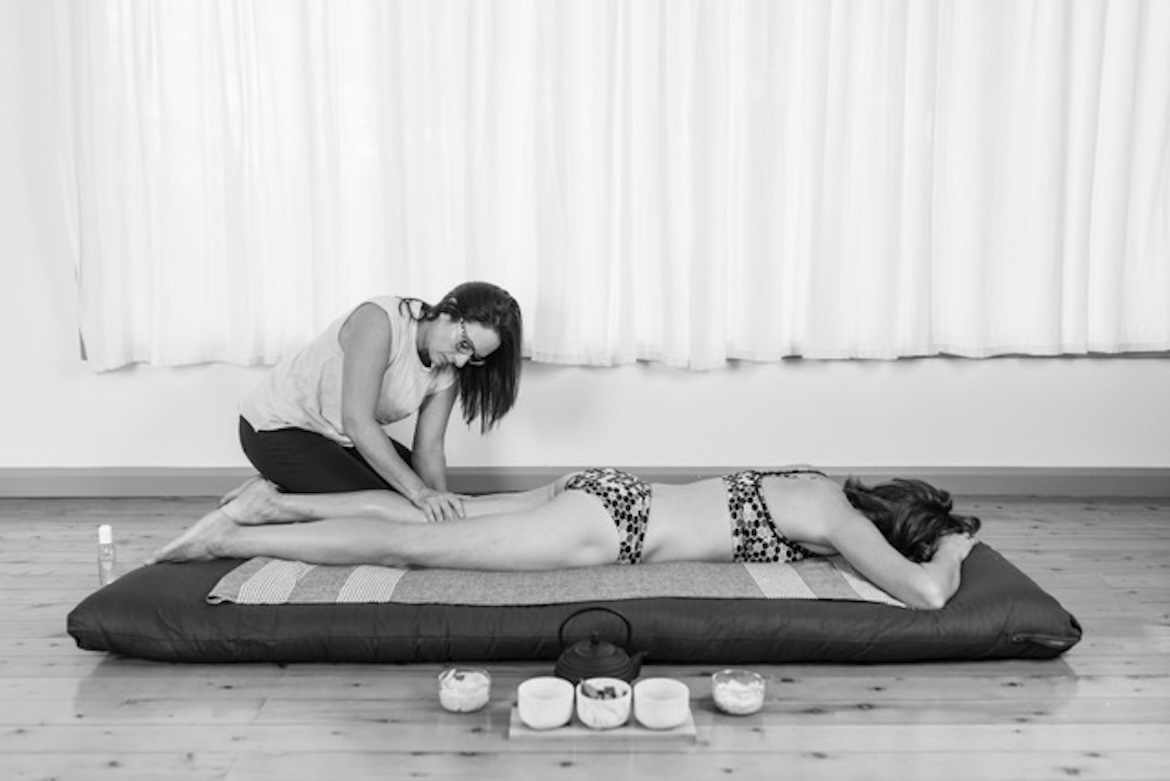
At its core, bodywork of care is a holistic approach to postpartum recovery that supports the whole mother physically, emotionally and mentally. Jackie grew up with five cross-cultural foundations to postpartum care – rest, warmth, bodywork of care, postpartum nutrition and creating a community/village around a mother. She crosses over three of these foundations – rest, warmth and bodywork. The 6th foundation is matrescence, which she is currently studying. Jackie’s care typically begins in the days following birth and continues daily for up to four weeks. Each session includes Jamu massage, the application of traditional herbs and specialised wrapping techniques designed to support healing and stability in the body. Postpartum tea is provided post care and breathing and meditation/time to be heard and validated is brought into her care too, holding space for birth traumas, perinatal depletion, anxiety, postpartum depression and any ‘red flags’, allowing her to reach out to the larger practitioner community for deeper support. But the true essence of the work goes beyond technique; it lies in presence.
Jackie allows time for conversation, stillness and connection. She adapts to the rhythm of the mother and baby, creating a calm and supportive environment where recovery can unfold naturally within a family’s home. This daily presence across four weeks can be transformative, as it was for her.
Mothers often describe feeling more settled, more confident and more emotionally supported as their bodies heal. Families feel reassured knowing someone experienced is guiding them through the early days of parenthood and their birth experience is validated, mapping out a plan after the Jamu postpartum care is completed. In many ways, Bodywork of Care restores something modern life has lost: the village.
Challenging the “Bounce-Back” Culture
One of the most important aspects of Jackie’s work is education.
For decades, many mothers have been encouraged to return quickly to daily responsibilities after birth, often without adequate time to recover. This expectation can leave women feeling exhausted, isolated and unsupported. As Sociologist Dr Sophie Brock mentions, “The Perfect Mother Myth”.
Jackie believes the postpartum period deserves greater recognition. She refers to this time of rest as the fourth trimester/golden month/confinement, a continuation of pregnancy in which the mother’s body and mind require careful attention and rest. Her message is simple, yet powerful: rest is not weakness or a luxury, rest is recovery. By advocating for slower, more intentional postpartum care, Jackie is helping to shift the conversation around motherhood and healing.
Expanding the Work Beyond One Practitioner
As demand for her services increased, Jackie faced a difficult reality. She could not physically reach every mother who needed support. Turning women away became one of the most challenging aspects of her work. Instead of accepting that limitation, she chose to expand her impact. Over several years, Jackie developed The Nurture by Touch Method®, a comprehensive training and certification program designed to educate and mentor practitioners in Jamu Innate Postpartum Care. She sat down and wrote her three manuals, had copyright and trademarks sorted and applied to be an accredited/endorsed Training Provider, which was accepted by IICT after a long, hard road. The program blends traditional knowledge with modern, trauma-informed practice, ensuring that new practitioners are equipped to support mothers safely and respectfully. This step marked a turning point in her journey. Her work was no longer just a service; it has become a movement.
Preserving a Lineage of Care
For Jackie, teaching others is about more than professional training. It is about preserving a lineage. She speaks often about honouring her teachers and the cultures that entrusted her with this knowledge. Maintaining the integrity of these traditions is central to her mission. Every practitioner trained through her program becomes part of a wider community dedicated to supporting mothers with compassion and skill. Together, they are helping to rebuild the network of care that once surrounded women after birth.
The Future of Postpartum Care
Jackie’s vision is both simple and ambitious: a future where every mother has access to nurturing, knowledgeable support during the fourth trimester.
She hopes to see postpartum care recognised as an essential part of maternal health – not an optional luxury, but a vital foundation for long-term wellbeing. Her work continues to grow through education, advocacy and community connection. And at the centre of it all remains a quiet but powerful belief: when mothers are cared for, families are strengthened. When families are strengthened, communities thrive.
“Bodywork of Care is not just a practice; it is a return to remembering how to care for mothers.” Jackie Gorman

Here, Jackie talks to The Natural Parent Magazine about the work-life balance, the challenges she has faced along the way, and her hopes for the future.
Yin and Yang: How do you balance work and family?
Balance for me is not about perfection. It is about presence and honest boundaries. This work is emotionally and physically demanding, and I have learned over the years that caring for others begins with caring for myself. I prioritise rest, time for myself at the ocean, time with my son and moments of stillness so that I can show up fully for the mothers I serve.
I also practise what I teach. I’m in the 5th Trimester – menopause – and I have adapted the principles of postpartum care within this last Rite of Passage as a woman. The principles of postpartum care, slowing down, listening to the body, honouring cycles of rest and recovery are not just for new mothers. They are essential for anyone in a caregiving role. My family and friends understand the purpose behind this work, and they have been an important part of the journey. Their support allows me to continue serving the community with strength and clarity. My son spent some time with me on the road, during Covid when he was younger, and now that he is 16, it has given him a deeper emotional understanding of what this care is all about and I hope he carries this into his older years.
The drive: What challenges have you overcome?
There were practical challenges, long hours on the road, managing the physical demands of the work and navigating the emotional weight of supporting mothers experiencing trauma, anxiety or postpartum depression – and, most importantly, raising my son on my own. This work vs corporate work gave me the flexibility I needed to be present for my son. But every challenge strengthened my resolve. Not just from a work-related perspective, but also from personal trauma.
Because I have witnessed firsthand what happens when a mother is truly cared for: her body heals, her confidence grows and her family thrives when she is OK.
For better or worse: What are the pros and cons of running your own business?
The greatest privilege of running my own business is the ability to serve mothers in a way that aligns with my values, and have the flexibility to be there for my son. I have the freedom to honour tradition, uphold ethical standards and create a model of care that prioritises the wellbeing of mothers and families.
It is deeply fulfilling work.
However, the responsibility can be significant. Running a business requires resilience, discipline and the willingness to carry both the emotional and practical aspects of the work. There are long hours, administrative demands and moments of uncertainty and loneliness.
Yet, the rewards far outweigh the challenges. There are many moments that make me ask, “Should I find a permanent job with a stable monthly income for my son and I?”, and every time I settle with a “No”.
There is nothing more meaningful than witnessing a mother regain her strength and confidence after birth.
Hopes and dreams: What next?
My vision for the future is to expand access to postpartum care while preserving the integrity of the Jamu tradition. I want to train and mentor more practitioners so that every mother, regardless of where she lives, has access to skilled, compassionate support during the fourth trimester.
I also hope to continue building awareness around the importance of rest, recovery and community care after birth. This work is bigger than one business. It is about rebuilding the village that once surrounded mothers – a network of knowledge, support and connection that strengthens families and future generations, and my role is simply to help carry that wisdom forward.
Visit nurturebytouch.com.au to find out more about the services Jackie offers. You can also follow Nurture by Touch on Facebook and Instagram.