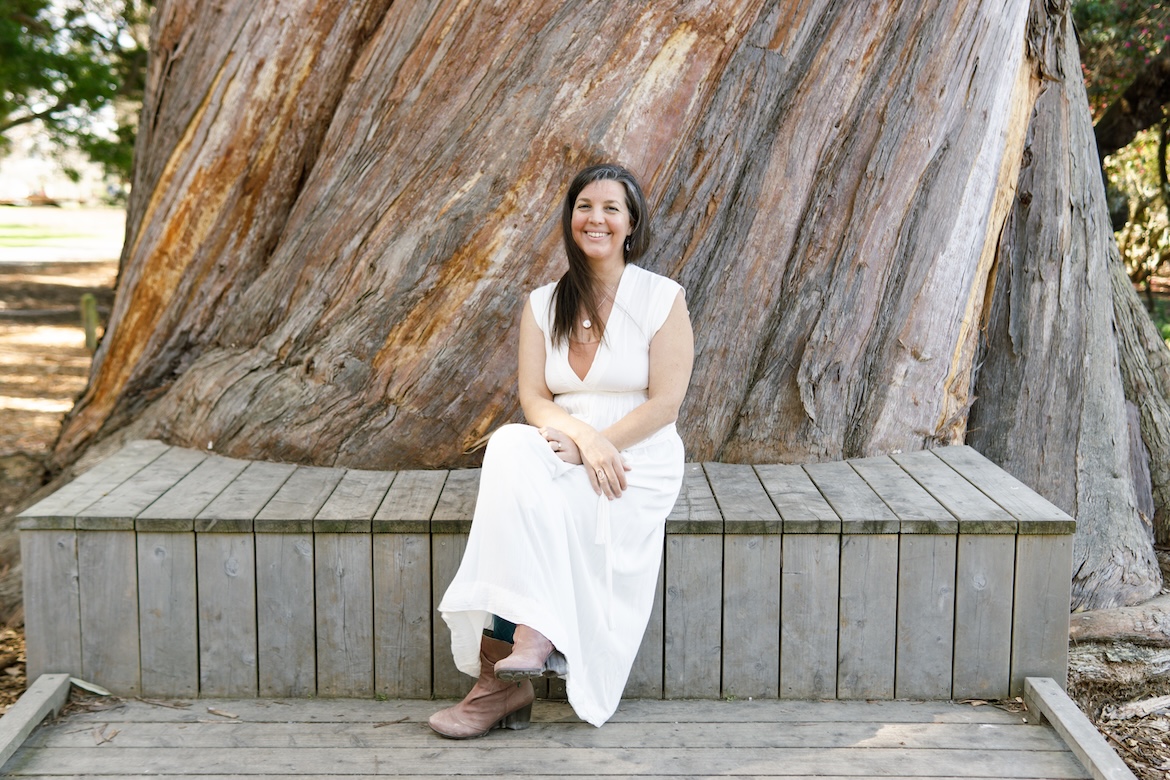
For Gloria de Gast, motherhood became both a deeply personal journey and a powerful lens through which to understand the importance of emotional safety, connection and self-care. As a holistic practitioner, educator and mother, Gloria’s work brings together nervous system awareness, embodied practices and relational support to help women reconnect with themselves beneath the demands of everyday life. After years of study, clinical practice, fertility challenges and the transformative experience of becoming a mother, she has developed a deep understanding of what it means to care for others without losing connection with yourself. Today, she supports women to slow down, listen inward and create the conditions for greater resilience, self-trust and wellbeing – lessons she continues to live and learn through motherhood herself.
The passion: What inspired you to set up your business?
What inspired me to create this work is deeply personal, but it’s also something I now see reflected in many women.
For much of my life, I was highly aware of the people around me. I could sense what others needed, what was happening beneath the surface, and how to adapt to keep things moving smoothly. Looking back, I can see that this sensitivity began as a way of staying safe.
Like many women, I became very good at caring for others while becoming increasingly disconnected from myself.
On the outside, life looked functional. I was doing what needed to be done, moving forward, achieving goals and managing responsibilities. But underneath, there was a constant sense of pressure. My body was carrying far more than I realised.
It wasn’t until my mid-twenties, during my first Ayurvedic massage training, that I encountered a completely different way of relating to myself. For the first time, I experienced the body not as something to manage, improve or push through, but as something to listen to. That experience changed the direction of my life.
What followed was years of study, clinical work and personal exploration. But the deepest learning came through my journey into motherhood.
After twelve years navigating fertility, I came to understand something that would eventually become central to my work. Despite doing all the “right” things – therapies, practices, personal development – I was still living in a state of nervous system activation.
My body didn’t need more effort; it needed safety.
The shift happened slowly. Not through a breakthrough, but through learning how to stay with myself differently. How to listen instead of override. How to respond with care instead of pressure. How to create the internal conditions that allowed my system to settle.
When I eventually became pregnant and later gave birth to my daughter, something became profoundly clear: the body is infinitely intelligent. When it feels safe enough, it knows how to move toward healing, growth and connection.
Motherhood deepened this understanding even further. Watching a child develop showed me how much human beings thrive when they feel seen, supported, understood and emotionally safe. It also highlighted how many adults are still longing for those same experiences.
Many of the women I work with are incredibly capable. They are caring, resilient and deeply responsible. They hold families, relationships, businesses and communities together, but beneath that competence, many are exhausted. Not because they are doing something wrong, but because they have spent years carrying more than their nervous systems were ever meant to hold alone.
What I often see is that women know how to offer care to everyone around them, yet struggle to extend that same care toward themselves.
Their bodies remain vigilant.
Their needs are pushed aside.
Their inner world becomes something they manage rather than listen to.
My work is about creating a space where that pattern can begin to change – a space where a woman feels safe enough to soften, safe enough to listen, safe enough to develop a different relationship with herself, because what I’ve witnessed time and time again is that real change doesn’t happen through force. It happens when someone feels genuinely met.
When that happens, the nervous system begins to reorganise. There is more space, more clarity and more capacity. Life starts to be lived from connection rather than survival. In many ways, I believe this is the deeper work of our time. Learning how to care for ourselves with the same presence, compassion and attunement that we so readily offer others.
My role is simply to help create the conditions where that becomes possible. To offer a space where women can come home to themselves, at their own pace, and discover that what they have been searching for may already be within them.
The launch: How did you start out in the beginning?
My work didn’t begin with a business plan or a single defining moment. It emerged gradually through experience, curiosity and the people who found their way into my treatment room.
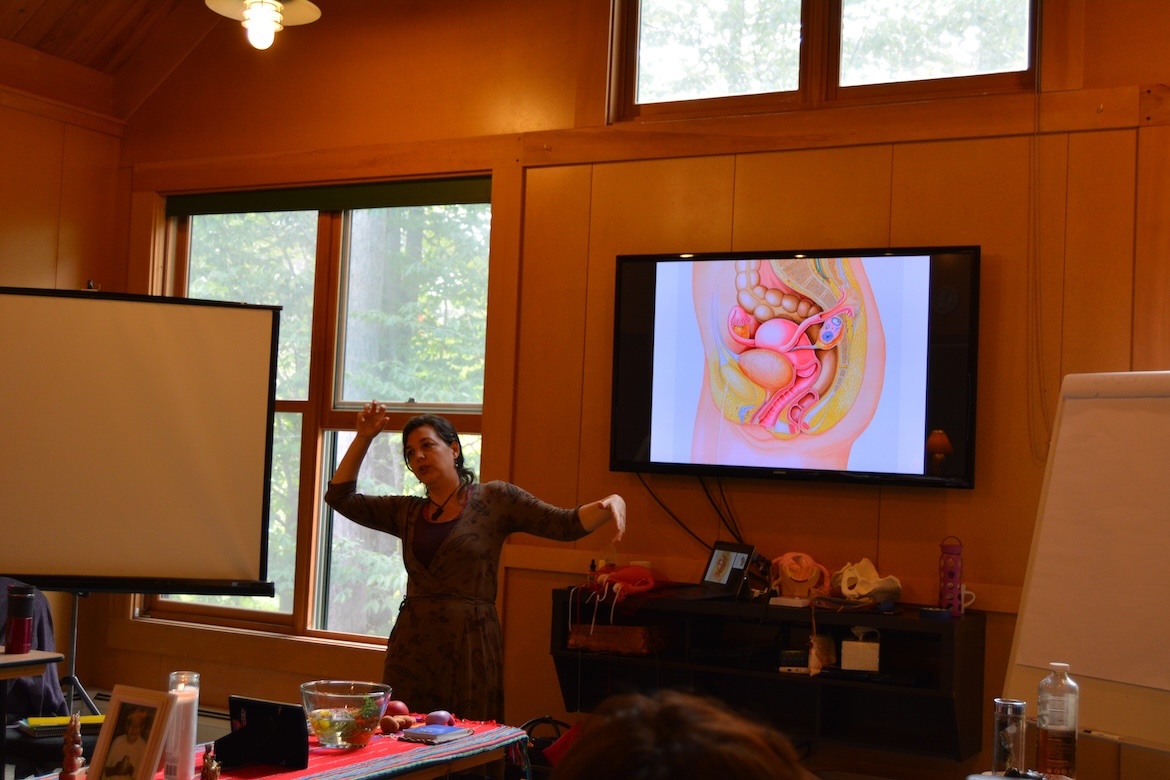
I initially left a more traditional career path to train in Ayurvedic manual therapy and began working in a holistic clinic in Milan. Most of my early clients came looking for relief from stress, tension or exhaustion. On the surface, they were seeking physical support. But very quickly I noticed something deeper: often, what people were carrying wasn’t just held in their muscles or posture. It was held in the way they related to themselves.
Many were functioning well on the outside while quietly disconnected from their own needs, emotions and limits. I became fascinated by what I was witnessing. This led me to further training in Life Counselling, family constellation work, trauma-informed approaches, early development and various body-based modalities. I wanted to understand not only what was happening in the body, but why.
Over time, I began to notice a consistent pattern, that when people felt genuinely safe, something began to shift naturally. Emotions that had been held for years would surface, physical tension would release, new insights would emerge. Not because anyone was forcing change, but because the body no longer needed to stay in protection. That observation became one of the foundations of my work.
I saw it repeatedly, particularly in women – women who were capable, caring and highly functional, yet often carrying enormous responsibility without enough support themselves; many had spent years adapting, managing and meeting the needs of others. Their nervous systems had become organised around being available, capable and resilient. What was often missing was the experience of being deeply supported themselves.
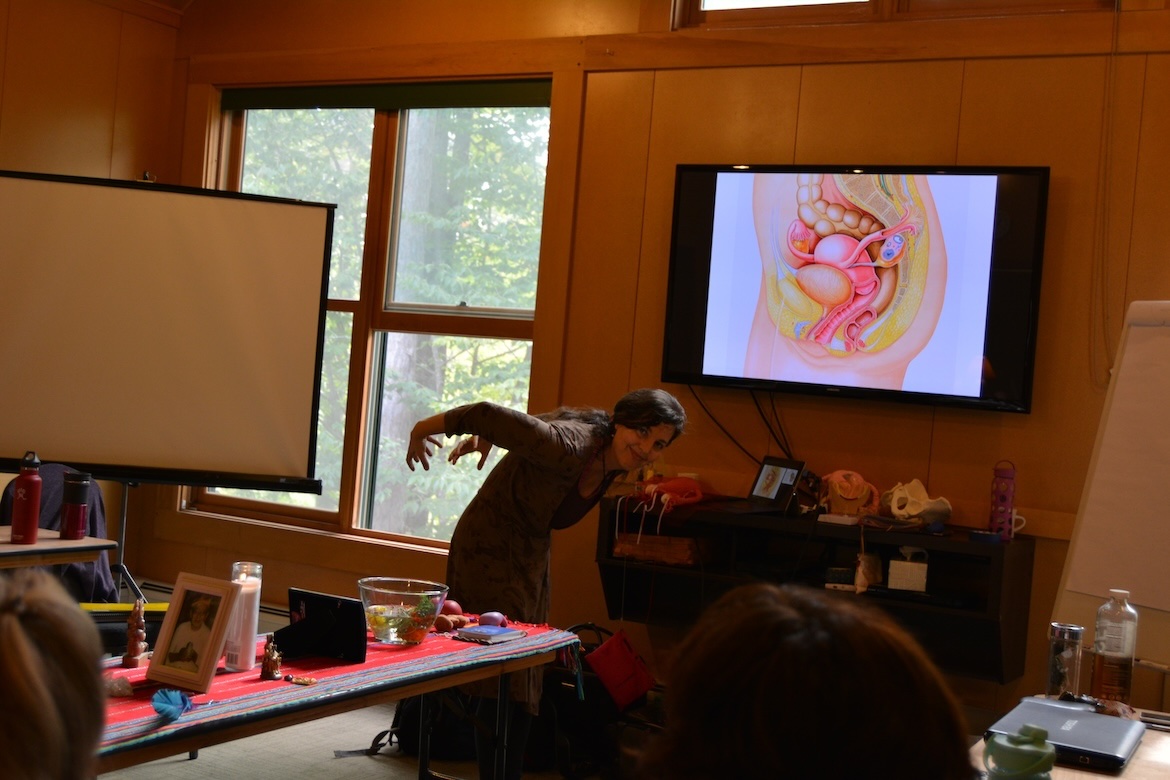
Teaching became another important chapter in this journey. As I began teaching Ayurvedic and abdominal therapy, I had the opportunity to witness what happens when people are given the right environment to learn, grow and connect.
One experience that has stayed with me involved two participants who initially struggled to be in the same room together due to their very different perspectives and backgrounds. Over the course of the training, something softened. Through consistency, structure and a sense of safety, they gradually began to see one another differently. It was a powerful reminder that people rarely change through pressure… They change when they feel safe enough to.
Looking back, I can see that what I was learning wasn’t really about technique, it was about relationship: the relationship we have with ourselves, the relationship we have with our bodies, the relationship we have with others.
After becoming a mother, that understanding deepened even further. Motherhood brought me face to face with the importance of attunement, presence and emotional safety. It also showed me that many of the conditions children need to thrive are the same conditions adults continue to need throughout their lives.
When I eventually returned to practice, I did so with much greater clarity. What had once seemed like many different interests and trainings revealed itself as one coherent thread.
Today, my work brings together nervous system awareness, relational support and embodied integration… not to fix women, but to help create the conditions in which they can reconnect with themselves and move through life with greater ease, resilience and self-trust.
What I offer today wasn’t built overnight. It has been lived, tested, questioned and refined through years of experience, both professionally and personally… and it continues to evolve alongside the women I have the privilege of working with.
The innovation: What was the biggest breakthrough for you with your business?
One of the biggest breakthroughs in my work came when I stopped focusing on what I was doing and started paying closer attention to what was actually creating change. Like many practitioners, I spent years training in different methods and approaches. Those experiences were valuable and continue to inform my work today; but over time, I noticed something surprising: the most meaningful shifts weren’t necessarily happening because of a particular technique. They were happening because of the environment in which the work was taking place. When women felt safe, seen and unhurried, their bodies began to respond differently. Emotions that had been held for years would emerge. New perspectives would arise.
Patterns that once felt fixed would begin to soften.
Not because anyone was trying to change them, but because their nervous systems no longer needed to stay in the same protective state. This changed the way I understood healing altogether. I realised that many women don’t need more information, they don’t need another strategy, they don’t need another reason to feel that they’re somehow getting it wrong. What they often need is an experience that is increasingly rare in modern life: the experience of being met without judgement, pressure or expectation. A space where they don’t have to perform, a space where they don’t have to hold everything together, a space where they can simply be.
For many women, this can feel unfamiliar at first. We’re often taught how to care for others long before we learn how to care for ourselves. We learn to override tiredness, push through discomfort, ignore our needs, stay strong.
Eventually, those patterns become embedded in the body. The breakthrough for me was understanding that lasting change happens when we begin relating to ourselves differently, not through force, but through presence, patience and attunement.
Today, the work I offer is less about fixing problems and more about helping women develop a different relationship with themselves: one where the body is listened to rather than overridden, one where emotions are met rather than managed, one where the nervous system experiences enough safety to begin reorganising naturally.
In many ways, the innovation wasn’t about creating something new, it was about returning to something essential: trusting the wisdom of the body, trusting the importance of relationship, and trusting that when the right conditions are present, change unfolds in its own time.
Yin and Yang: How do you balance work and family?
I’ve come to see balance less as something we achieve and more as something we stay in relationship with. Motherhood has been one of my greatest teachers in this.
When I became a mother, I had recently moved to New Zealand and was far away from the community and support systems I had known before. The early years were beautiful, but they were also deeply demanding. Like many mothers, I found myself giving continuously while navigating long periods with very little support around me. It required me to slow down in ways I never had before; it also showed me something that has become central to both my parenting and my work: children are deeply responsive to the nervous systems around them. They don’t only listen to our words. They feel our presence. They respond to our pace, our stress, our capacity to stay connected.
As I began paying attention to this, I realised that many adults are no different, we all thrive when we feel safe, seen and supported, we all struggle when we’re carrying too much for too long.
One of the things I see most often in women is the invisible load they carry every day. The planning, organising, anticipating and caring that often goes unnoticed by everyone except the person holding it. Many women are so accustomed to carrying responsibility that they barely notice the weight of it anymore. The body notices, though. The nervous system notices.
For me, balance has become less about doing everything perfectly and more about staying present to what matters most in each moment. When I’m with my clients, I’m with my clients. When I’m with my daughter, I’m with her. That doesn’t mean life is always balanced, but it does create a sense of coherence. Perhaps the biggest shift has been learning to trust more: trusting my partner, trusting the life we’ve built, trusting that I don’t need to carry everything myself.
Parenting has also transformed how I see growth and development. I no longer see it as shaping someone into who they should become. Instead, I see it as creating the conditions where they can naturally unfold into who they already are. Interestingly, that is also how I see my work with women – not fixing, not forcing, simply creating the conditions where growth becomes possible, and often, my daughter reminds me of that. There are moments when she reflects back the very things I share with clients – a reminder that we’re all learning, growing and regulating together. Not perfectly, but humanly.
The drive: What challenges have you overcome?
Many of the greatest challenges I’ve faced haven’t been visible from the outside. Like many women, I learned early how to adapt: how to be capable, how to keep going, how to make things work. What took longer to recognise was how often those adaptations came at the expense of my own needs. One of the biggest shifts has been learning to take up space in a different way.
For many years, I would often soften my depth through humour or minimise what I knew in order to make others more comfortable. It was subtle, but it was a pattern. Over time, I realised that staying small might feel safer, but it also creates distance, not only from others, but from ourselves.
Learning to trust my voice and my experience has been an ongoing process.
There have also been significant life transitions: moving countries, becoming a mother, building a practice far away from the communities that first knew me.
There were periods of loneliness and uncertainty that challenged me deeply. Looking back, those experiences taught me something I now see in many of the women I work with: sometimes the greatest growth comes when there is no external certainty to hold onto. You learn to develop an inner reference point, a deeper trust in yourself.
Professionally, one of the greatest challenges has been communicating work that doesn’t fit neatly into conventional business models. We live in a culture that often values speed, certainty and quick results. The work I do moves differently: the nervous system changes gradually, trust develops over time, transformation tends to unfold through relationship rather than pressure.
Learning how to speak about that in a world that often prioritises urgency has required patience and clarity. What has helped me most is recognising that I don’t need to convince anyone; I simply need to remain true to the work itself.
Today, I feel less interested in proving anything and more interested in creating meaningful impact. Less focused on pushing, more focused on presence, and perhaps most importantly, I’ve learned to trust my own inner knowing.
When I look back on the most difficult moments of my life, they are often the moments when I ignored what I already knew deep down. Learning to listen to that voice has become one of the most valuable forms of guidance I have.
For Better or Worse: What are the pros and cons of running your own business?
One of the greatest gifts of running my own practice is that it allows me to work in a way that feels aligned with who I am and how I believe change happens.
What I value most is witnessing women reconnect with themselves, not through achievement, not through fixing, but through developing a deeper sense of safety and belonging within their own lives.
There is something profoundly moving about watching a woman realise that she no longer has to be in a constant state of effort, that she can soften, that she can trust herself, that she can feel at home in her own body. Those moments never lose their significance for me.
At the same time, running your own business comes with challenges. As a mother, there are many moments when work and family life intersect in imperfect ways. An idea arrives while making lunch. Inspiration appears during homeschool activities. Plans change unexpectedly.
I’ve had to learn flexibility, I’ve had to learn patience, and I’ve had to let go of the idea that everything needs to happen immediately. In many ways, motherhood has strengthened my work. It has taught me how to prioritise what matters, how to stay present, how to trust timing.
There is also the reality of uncertainty: self-employment requires a relationship with the unknown, rather than trying to eliminate uncertainty. I’ve learned to meet it differently.
Simple practices like slowing my breath, reconnecting with my body, spending time with my family or talking things through with my partner help me return to perspective.
Over time, uncertainty has become less something to fear and more something to navigate. If there is one thing I wouldn’t trade, it’s the depth this path has invited into my life: the ongoing exploration of what it means to be human, to be in relationship, to continue growing.
That journey informs everything I offer and remains the foundation beneath all of my work.
Hopes and dreams: What next?
What I hope to see grow isn’t simply my business: it’s the possibility that more women begin to experience what becomes available when they stop living in survival mode.
So many women are carrying far more than anyone realises: they are managing households, relationships, careers, children, ageing parents, emotional labour and endless responsibilities. Often, they are doing this while quietly ignoring their own needs, pushing through exhaustion and believing that caring for themselves must come later.
I think we’re beginning to recognise that this way of living comes at a cost, not only physically, but emotionally and relationally as well.
The work I feel called to contribute to is helping women reconnect with themselves in a way that feels sustainable and real – not through self-improvement, not through becoming someone new, but through developing a different relationship with themselves: one built on listening rather than overriding. Compassion rather than criticism, connection rather than constant effort.
What excites me most is witnessing the ripple effect that occurs when this happens. When a woman feels safer within herself, it impacts everything around her, her relationships change, her parenting changes, the way she makes decisions changes, the way she responds to stress changes, the way she relates to her body changes… and often, the people around her begin to benefit too.
As a mother, this feels especially important. Children learn far more from what we embody than from what we teach.
When they grow up around adults who can recognise their needs, regulate their emotions, repair relationships and care for themselves with kindness, they inherit something powerful and they learn that they matter too.
In many ways, this is what gives me hope – not the idea of changing the world all at once, but the possibility of changing the experience people have of themselves and each other… one relationship, one family, one nervous system at a time.
As for the future, I see this work continuing to grow through individual sessions, group experiences, teaching and mentorship. But the deeper vision remains the same: a world where women no longer have to abandon themselves in order to care for others, a world where care includes the person giving it, a world where more people feel at home in their bodies, in their relationships and in their lives.
For me, that’s not just the direction of my work; it’s also the practice that continues to guide my own life every day.
Visit gloriadegast.com to find out more, and connect with her on Facebook and Instagram.