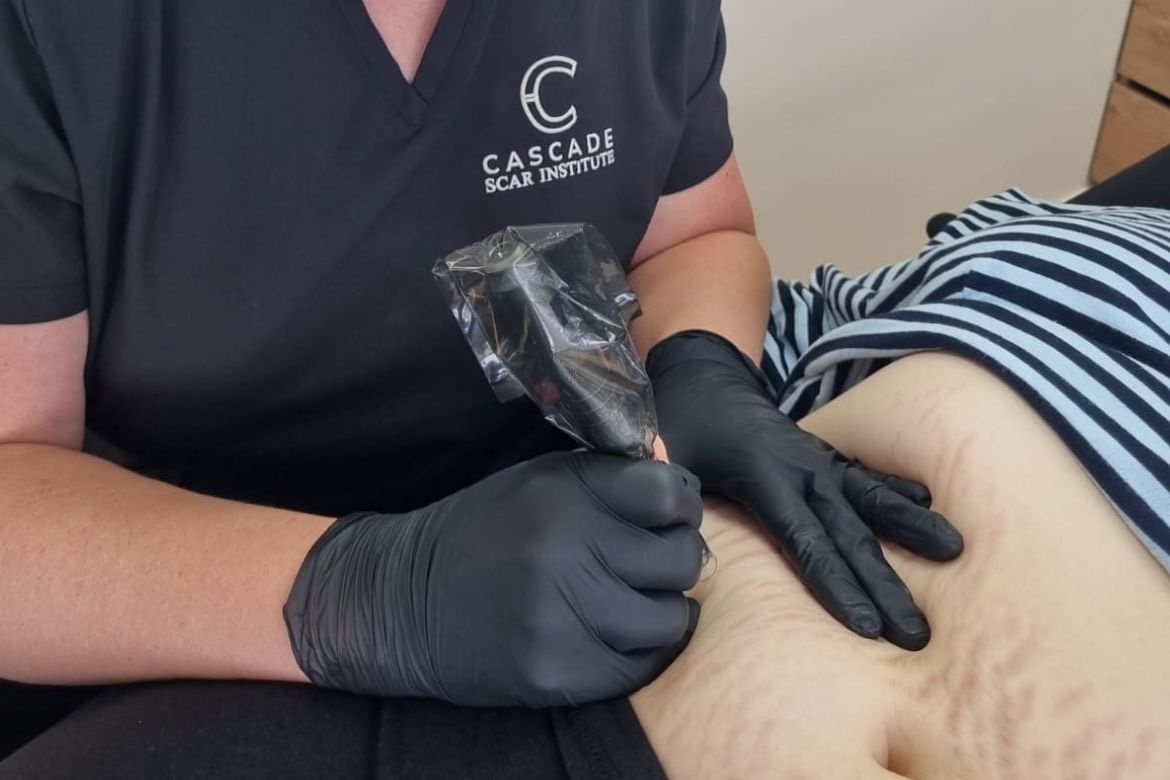
After an injury brought her hands-on osteopathic career to an unexpected end, Holly Miles found a new direction in a concern she’d heard from patients for years: scars that had healed but still affected how they felt, moved and saw themselves. Drawing on two decades in primary healthcare, she founded Cascade Scar Institute to offer individual scar care with clinical understanding and honest advice. She’s also launching In Your Hands, a self-paced online course teaching c-section scar self-massage and home rehabilitation strategies, with the aim of making this support available to mums throughout New Zealand. Here, Holly shares her experience of starting again, making time for family and building a business around the care she believes women deserve.
The passion: What inspired you to set up your business?
After 20 years in primary healthcare as an osteopath, one pattern kept showing up in my treatment room. Women came to me for the aches and pains that interrupted their daily lives, but one part of them never received any attention: their scars. Scars that still felt “icky” or “yucky”, or that they felt no connection to at all. Most came from situations they hadn’t chosen. Some were reminders of harder times they’d since come through. Others were physical reminders of a chapter they wanted to move on from, but didn’t know how.
A treatment room is a neutral, confidential and safe space, so people tell you things. I heard what they’d change about themselves and about the feelings still attached to those scars like old chapters in their lives. When I asked a few more questions, the answers were always the same. They’d never really talked to anyone about their scars or stretch marks, let alone had them looked at by someone with real clinical depth. That’s a huge gap in healthcare for something that affects so many women’s mental wellbeing, appearance and physical function.
They’d been told “It’s healed, just keep massaging it”, “That’s just the way it is now”, or “There’s not much else we can do.” In other words: that’s your lot, stop moaning about it. And nothing gets my back up more than being told nothing can be done! As with most things in the body, even if it can’t be perfect or go back to exactly how it was, it can usually be improved. Where there’s a will, there’s a way.
As an osteopath, I’ve spent my career working with skin, fascia and muscle, and the relationships between them, so I know how a disruption in one layer can have knock-on effects elsewhere in the body. Scars are a structural change, both on and beneath the skin, and structural problems need a structural approach, not a different cream.
I built Cascade Scar Institute to fill that gap. My whole philosophy fits in one line: scars are under-treated, not untreatable. For a lot of my patients, this is the first time anyone has assessed what’s going on in and beneath their skin from a structural perspective – and the first time they’ve been offered an option that sits between a beauty treatment and plastic surgery.
The launch: How did you start out in the beginning?
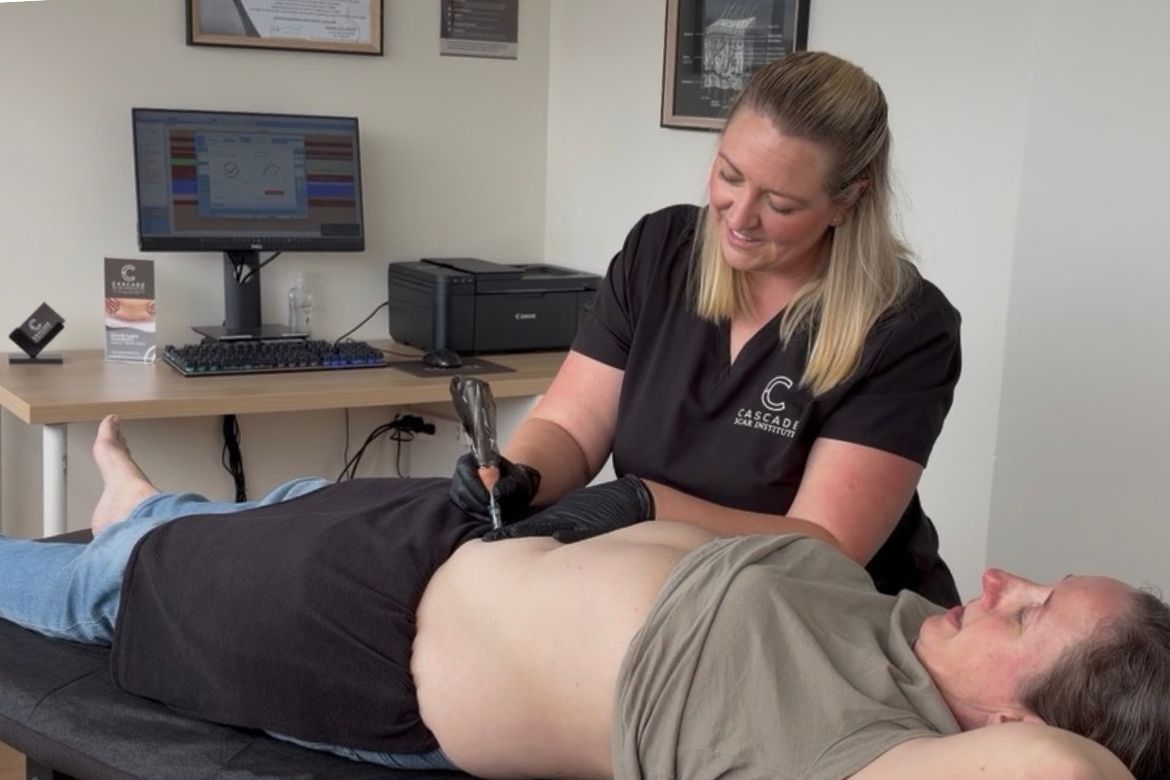
As with a lot of things in life, you pick a plan, work hard towards it, and suddenly find yourself heading in a completely different direction – much like motherhood, as I’m sure plenty of readers can relate to! For me, an injury of my own closed the door on the hands-on osteopathic work I’d done for most of my career. In 2024, I sold the practice I’d spent 14 years building on the Hibiscus Coast and had to work out what came next. I couldn’t shake all those conversations with patients about their scars.
So I took everything I knew about anatomy, tissue and healing and focused it on one under-treated problem. I retrained in paramedical scar work with my mentor, Marnie, and spent the better part of a year building the clinical foundations properly. That meant working out from scratch how to combine my hands-on skills and background knowledge with my new training to create a service bringing together a mix of skills I hadn’t seen offered in one place. Add in more study, a full refresh of skin and scar tissue anatomy, getting my health protection licence sorted and putting together an evidence base I’d be comfortable showing a GP. Cascade opened its doors in early 2026.
I’m not one for doing things by halves. If I was going to start again at this stage of life, it was going to be done right.
The innovation: What was the biggest breakthrough for you with your business?
One breakthrough was realising exactly who I’m best placed to help. For some people, a scar is a cosmetic concern, and that’s completely valid. I see those patients too, and for some of them, how a scar looks has a big impact. But I kept seeing patients whose scars were part of a much bigger picture: scars that limited movement or took the enjoyment out of everyday activities they’d taken for granted before surgery and really missed now. Think of a c-section scar alongside back or pelvic issues, someone who’s had repeated abdominal surgeries over many years, or a woman recovering from breast reconstruction. That’s where two decades of understanding how the whole body moves, connects and compensates really earns its place.
The second breakthrough was simpler: honesty. I treat every patient the way I’d want my own sister treated. I always tell people what they can realistically expect and when we’ll reassess to check their scar is responding the way we want it to. If it isn’t, I adapt my approach until it fits that patient and their very individual scar. If my treatment isn’t the right fit, I’ll say so and write a detailed referral letter to a more appropriate practitioner, even when that means no income for me. My measure of success is the patient’s outcome, not my invoice. That honesty has turned out to be the best marketing I’ve got: most of my patients come through word of mouth.
Yin and Yang: How do you balance work and family?
Oh gosh, I try so hard! But some weeks I do it badly, and I think any mumpreneur who says they’ve nailed it is fibbing. My husband runs his own business too, so our house is basically two small businesses and a family sharing a calendar.
What’s changed is that I now get to design my working life, rather than fit my life around work. I spent years working 12-hour days, seeing 60 patients a week, and working some weekends and public holidays too. Since having my kids, I’ve realised how short a time they’re little for, and I want to be present for it. That’s what they’ll remember.
Now I can be the taxi that takes the school singing club to perform at the local retirement village, or turn up to the afternoon dress rehearsal of the school play. I can stay a little longer at kindy drop-off to make the first footprints in the sandpit with my son, or watch him on the monkey bars. Work will always be there, and there will always be people who need dedicated, respectful care. But very soon, my kids will be all grown up.
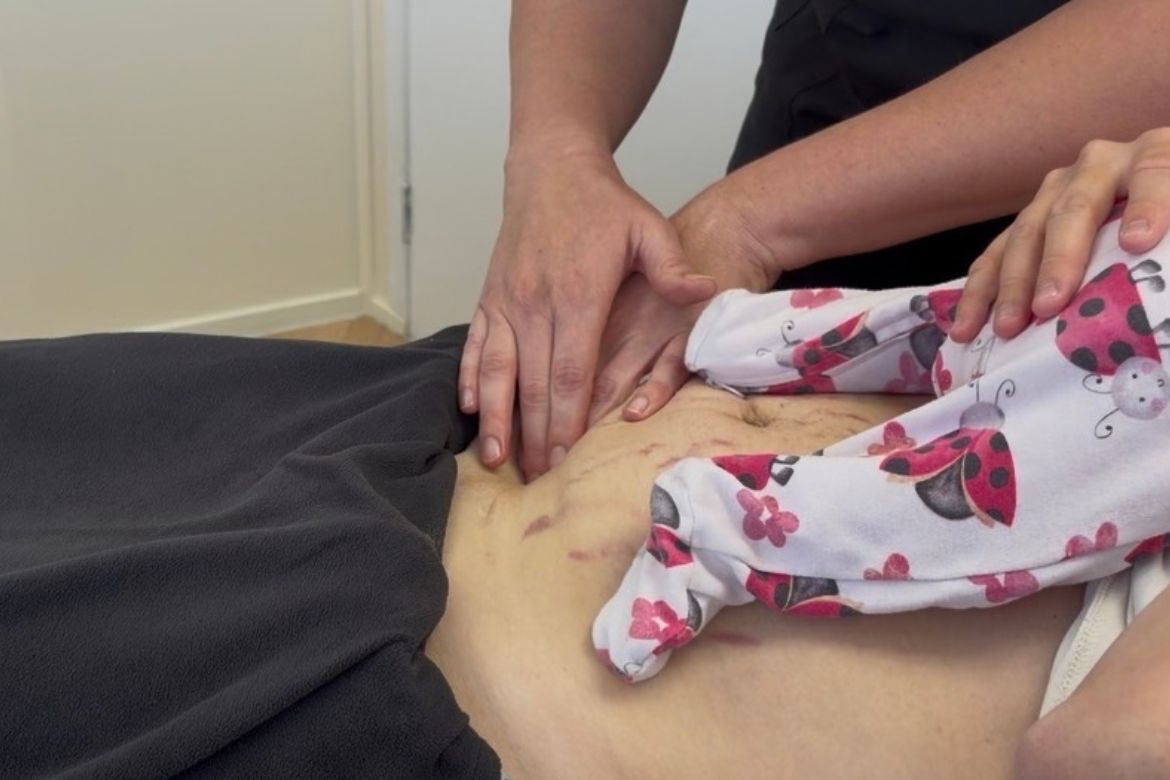
A lot of my patients are mums too, finally making time for themselves while juggling work, kids and the food shop, and trying to squeeze in something that helps them feel like themselves again. They get the school holiday juggle and the pick-up dash, and Cascade was built with all of that in mind. And with my c-section mamas, depending on the treatment, I sometimes get a cuddle with the little babies who’ve come along too – a lovely bonus!
The drive: What challenges have you overcome?
People call it resilience. I’d call it stubbornness, and I’ve had plenty of practice. I moved from the UK to New Zealand on my own at 25, with not much more than a qualification and a suitcase.
Then, two decades into a career I loved, an injury took the work I’d built my identity around off the table. Selling a practice you’ve spent 14 years building is a strange kind of grief. I’d worked hard to build that identity and had done well, then something completely out of my control changed it. Starting again just after I turned 40 – new modalities, new clientele, new everything – meant being a beginner again, in public. That’s humbling for anyone, especially someone who had taught at master’s level and coached other practitioners on building a business from scratch!
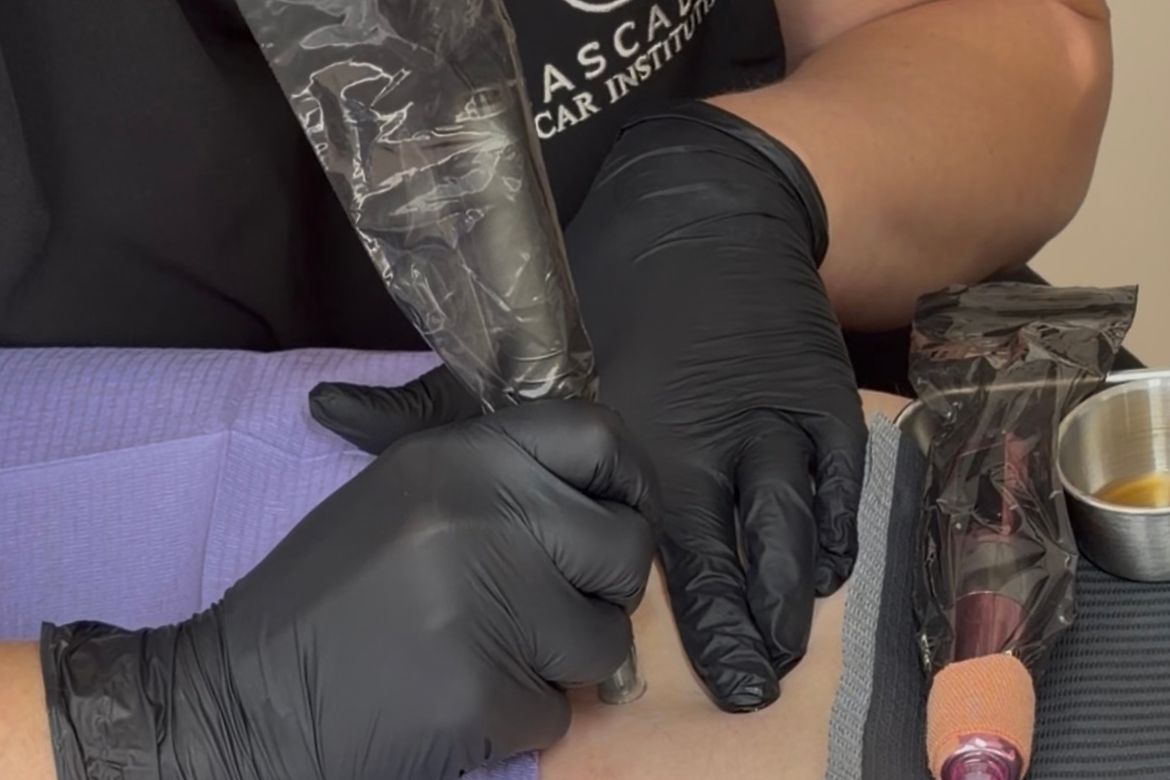
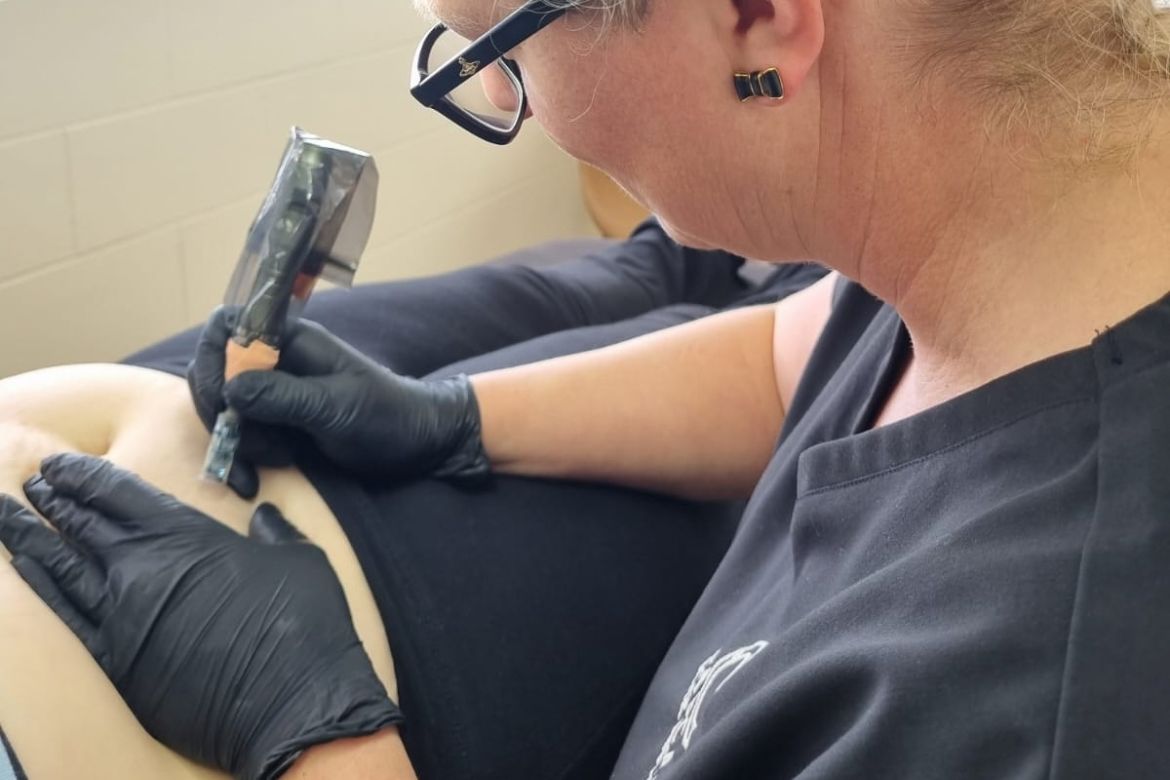
The other challenge is that I’m creating a category most people don’t know exists. Not many people wake up searching for “clinical scar rehabilitation”, let alone the combination I offer: paramedical inkless needling, photobiomodulation (red light therapy) and osteopathic scar techniques. So a big part of my job is simply letting people know this option exists and that it’s worth a proper look.
For better or worse: What are the pros and cons of running your own business?
The biggest pro is that I get to practise exactly the way I believe healthcare should be practised, using everything I’ve built over 20 years to help people with something that often feels quite vulnerable. That means honest assessments, plans built around the individual rather than a standard package, time to do things properly and a safe space to be listened to. Nobody tells me to rush a consult or upsell a package. There’s nothing quite like watching someone who’d made peace with a scar realise they didn’t have to.
As for the cons, being a sole practitioner means I’m the clinician, marketer, receptionist, bookkeeper, cleaner and IT department. When I’m not working, the business isn’t earning. Switching off doesn’t come naturally either; my brain is usually drafting a blog post while I’m cooking dinner.
Would I trade it? Not a chance. As any of my patients will tell you, I do love a challenge.
Hopes and dreams: What next?
Unsurprisingly, quite a lot! I’m launching In Your Hands, a self-paced online course that teaches mums c-section scar massage at home. I want to reach c-section mothers right across the country and give them a safe, guided way to help their scar recover in whatever time they have.
I also want to normalise the fact that we mums, with our c-section scars and stories, come in all shapes and sizes. Help available should suit everyone, not just make us feel like we should look a certain way or that we’ve done something wrong by not taking scar-care action sooner. It really is never too late to start scar massage, and the benefits, when done little and often, are very encouraging, even for c-section scars from 10 or more years ago. And yes, still excellent for multiple c-section scars too.
I’m also developing the Cascade Residency, which brings an eight-week scar treatment programme into partner clinics and salons across Auckland.
The bigger dream is simple: I’d like scar rehabilitation to be something people are routinely told about. It shouldn’t be something they stumble across years later by accident.
Visit the Cascade Scar Institute website to find out more, and connect with Holly on Facebook and Instagram.