By Camilla van Rosendal
I sometimes wonder whether my children are doing enough.
The question finds me most easily when the calendar begins to open up, when the school holidays stretch ahead without much arranged to fill them and the days seem to contain more hours than I have thought to account for. I can feel the impulse to intervene before anyone has even complained of boredom, as though an unclaimed afternoon were something I had overlooked rather than something I might have deliberately left alone.
Should I be filling this?
There is something persuasive about a childhood in motion. When lessons are attended, places visited and interests cultivated, we can see where the hours have gone, and in that visibility, there is a peculiar reassurance that something worthwhile is taking place.
Childhood itself has become remarkably visible. We catch glimpses of other children’s lives with an intimacy once reserved for people we actually knew, and all that visibility has a way of giving childhood a shape against which our own can be held. There is the childhood being lived, and somewhere alongside it, the childhood we are watching ourselves provide.
At times, I wonder whether we have begun to curate our children’s lives like exhibitions, carefully selecting what belongs, arranging experiences into something beautiful and meaningful, and standing back to assess what we have assembled. Somewhere along the way, we begin to measure ourselves against the childhood we believe we are giving our children.
I recognise this in myself, even as I question it. There are experiences I want my children to have because I believe they will enrich their lives, and others I find myself considering because some quiet part of me worries about what their absence might mean. There is real pleasure in imagining something they might love, in making it possible and being there to witness their delight. The distinction isn’t always obvious. Love, memory, aspiration and fear can inhabit the same decision so comfortably that it becomes difficult to tell where one ends and another begins.
I wonder, too, how much of what we imagine a good childhood should contain is shaped by the childhood we remember. We carry forward the things we loved, attempt to repair what we missed, and sometimes find ourselves constructing experiences for our children that belong as much to an earlier version of ourselves as to the people standing in front of us.
I have been thinking about what it would mean to give my children ten days with almost nothing planned for them.
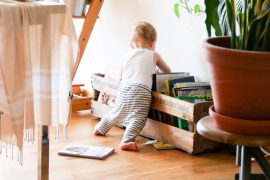
Days long enough for their games to acquire a life beyond the moment they began, for elaborate constructions spreading across the floor to become landscapes they return to, and for the weather, their moods and whatever catches their attention to have some say in how the hours unfold.
I can imagine the beauty of it. I can also imagine the arguments, the restlessness, the child who follows me from room to room declaring there is absolutely nothing to do, and the peculiar irritation of watching someone reject an abundance of possibilities because none of them has arrived already assembled.
There would be moments when I wanted to rescue the day.
And I wonder what, exactly, I would be rescuing.
The children from boredom? The afternoon from being wasted? Or myself from the discomfort of watching time pass without knowing whether I was making good use of it on their behalf?
I suspect the answer would change from one hour to the next.
I believe deeply in what spaciousness makes possible. Imagination needs somewhere to wander. Boredom can become invention. A child who has time to remain with an unanswered question may discover resources that never appear when somebody else is always ready with the next suggestion. And yet, even in imagining what these hours might cultivate, I am looking towards something that has not happened yet.
I notice how quickly I reach for the language of usefulness.
Free play cultivates creativity. Boredom develops resourcefulness. Time outdoors supports resilience, attention, emotional regulation. There are good reasons to believe these things, and I have no wish to dismiss them.
What interests me is how readily they become the terms upon which we grant childhood its freedom. Even our defence of doing less can become another way of hoping to produce more.
I know something of this from writing.
An idea can follow me for weeks without offering a single useful sentence, gathering its architecture somewhere beyond language while I continue to read, notice and circle something I cannot yet name. I have learnt, over time, to recognise that the visible work bears little relationship to the work being done, although I am less certain I have learnt to trust it.
There are still days when I want something to show for the hours.
It is easy to look back on a season of apparent stillness and call it necessary once it has produced the essay, the poem, the book. We grant the uncertainty meaning because eventually something emerged from it.
But I have followed ideas that never became anything, written pages that went nowhere, spent hours inside thoughts that dissolved before I could give them language. I cannot quite believe those hours were wasted simply because they left nothing I could hold.
Why, then, can it feel so difficult to extend the same generosity to childhood?
I can enter a room intending to make something better without having established that anything was wrong.
A few nights ago, I was reminded of this in a way I hadn’t anticipated.
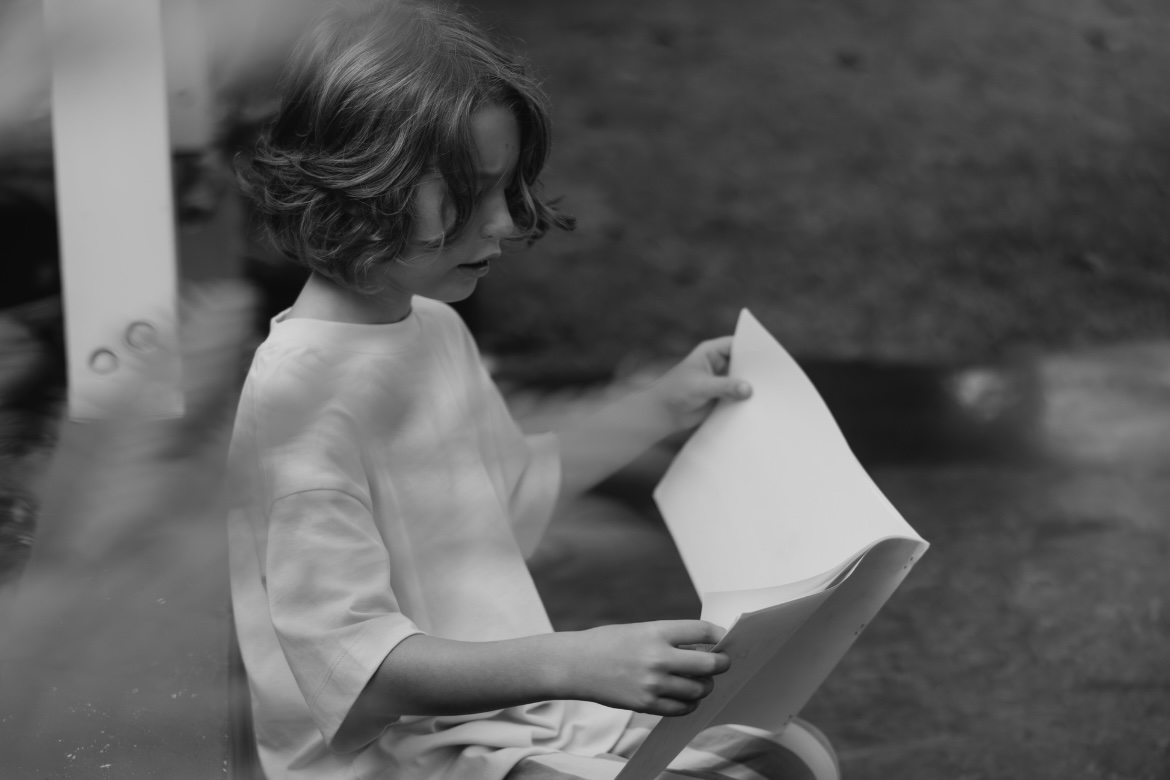
We were gathered around a dinner table spanning almost ninety years of life: my children’s great-grandmother, their grandparents, us, and our three children. Conversation had been moving in the loose, overlapping way it does when several generations are together, until my seven-year-old announced that he was going to run a workshop.
“Let’s go around the circle and each choose something you think is important.”
So we did.
Love. Survival. Resilience. Creativity. Connection. Work ethic. Adaptation. Butterfly.
Once everyone had chosen a word, he sent us back around the circle in the opposite direction, asking each person to explain why their word mattered.
Then came the final exercise. We were to use all eight word choices to construct a story about how they affected humanity. The most creative story would win a prize.
Somewhere along the way, the atmosphere around the table had changed.
Nobody was humouring a seven-year-old.
We were listening.
He held the attention of people aged four to ninety-two, drawing us into an idea that had not existed before he thought to speak it aloud. Each of us contributed something different, shaped by the years we had lived and the meanings we had gathered along the way.
I remember watching him and feeling that particular astonishment motherhood sometimes offers, when a child you know so intimately reveals a part of himself you have never quite encountered before.
I could see his confidence, his imagination, the ease with which he had gathered an entire room into something of his own making. I wondered where it had all come from, what had been quietly assembling beyond my attention while I was busy wondering whether I was giving him enough.
There was reassurance in it.
And then, almost immediately, I recognised the familiar movement of my own mind, wanting to turn the evening into evidence that something was working.
Here was the kind of independent thought I hoped those unclaimed hours might cultivate.
But the longer I sat with the memory, the more interested I became in something else.
For a little while, the child we were accustomed to making room for had become the one making room for us. He had brought an idea to the table and invited us into it, asking each of us to offer something of ourselves in return.
Nobody had thought to arrange an intergenerational conversation about what matters in life.
And yet there we were.
I kept returning to butterfly, sitting there among survival, resilience and adaptation. The writer in me wanted to make something of it. Transformation, fragility, the extraordinary business of becoming. I could almost feel myself reaching for a metaphor that would justify its place among those weightier words.
But she might simply have meant butterfly.
I still want to give my children those ten days.
I can imagine the games that might begin, the arguments that might interrupt them, the things I would be tempted to improve. There would be experiences I wanted to offer and places I hoped to take them. I don’t imagine that love will ever stop wanting to give.
Ten days would not be enough.
I suspect they would only teach me how much I wanted there to be an eleventh.
Camilla van Rosendal is a writer, mother and author of Scatter to Bloom: Conversations with My Intuition. Through the Peaceful Mama Project, she explores matrescence, intuition and the unseen emotional architecture of family life, writing into questions of identity, belonging and the ways motherhood continually asks women to meet themselves anew.