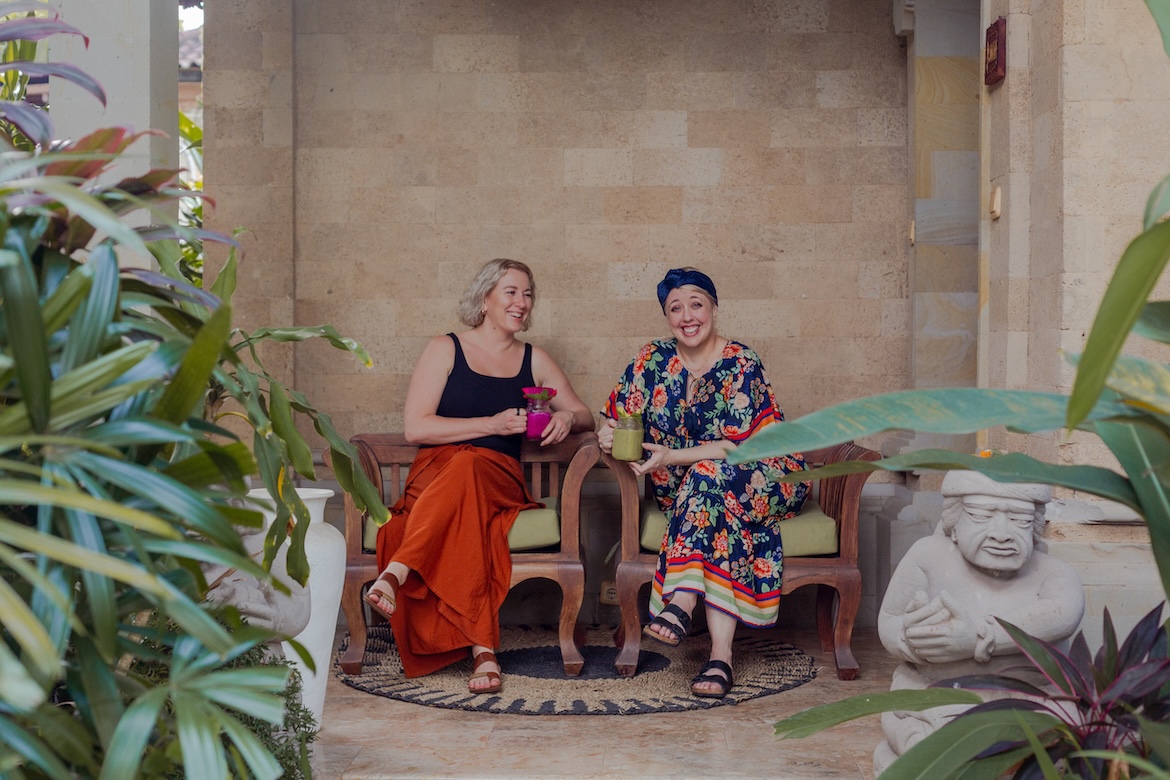
Not every business idea survives the flight home from Bali. But Seea did!
Sam, Jo and Jason are three mates and co-founders who got properly burned trying to find a legit spiritual practitioner during an overseas retreat they were hosting.
Instead of brushing it off and moving on with a bad taste in their mouth, they decided to do something about it to ensure no one else had to go through a similar experience ever again.
So they built Seea, the Airbnb of the spiritual space which connects people with verified spiritual and holistic practitioners, facilitators, healers and guides across breathwork, reiki, astrology, tarot and beyond.
Built in Aotearoa, live across both sides of the Tasman, Seea has global expansion firmly in the plans for 2026 and 2027. We sat down with co-founder Sam Browne to hear the story.
The passion: What inspired you to set up your business?
Getting scammed, actually! Jo and I were in Bali running a business retreat. The trip was beautiful – the ending was terrible with a rogue palm reader stiffing us on the bill. We can laugh at it now, but it planted this question we couldn’t shake: why is finding a trustworthy spiritual practitioner so hard?
We’re three co-founders who are unapologetically into the ‘woo’. We pull cards on a Tuesday morning and have strong feelings about crystals, but yet even we struggled to find practitioners and facilitators in this space we could genuinely trust. It’s all hush-hush Facebook groups, word-of-mouth referrals and a whole lot of crossing your fingers and hoping for the best.
We wanted to build something that took the safety of Seekers like us seriously. The people going through something real (postpartum burnout, grief, a health scare, that relentless low hum of modern life) and need to know the person they’re turning to in a vulnerable time is genuinely the real deal.

The launch: How did you start out in the beginning?
Like most startups, we learned our most expensive lessons early. We trusted the wrong developers on the first version of Seea and lost thousands of dollars finding that out – which is a particular kind of gut punch when you’re building a platform whose entire purpose is helping people avoid exactly that experience.
The real test came hours before our launch event. Over 100 people were coming through the door and we genuinely didn’t know whether we’d have a platform to show them. We went live that night and it wasn’t even close to being pretty. But the platform worked (just) and our first bookings came in (whew!) so we pretended we were fine and faked our way through what should have been one of the most exciting nights of our lives.
If launching taught us anything, it’s that showing up matters more than showing up perfect.
The innovation: What was the biggest breakthrough for you with your business?
Owning our own platform. After the painful lesson of trusting the wrong developers early on, we made the decision to build Seea‘s technology from scratch – proprietary software, our design, fully ours. For a founding team that didn’t come from a tech background, that was no small thing. But it means we control how Seea grows, how it feels and how it serves our community – without compromise. That’s not something we take lightly.
But what we’re most excited about is how we’re integrating AI across the platform. From helping Seekers find the right practitioner, to supporting the verification process, to smarter communications – it means the experience keeps getting better the more people use it.
Yin and Yang: How do you balance work and family?
‘Balance’ is a generous word for it haha! Tech startup founders don’t have typical office hours meaning we can’t always work 9-5 and mentally switch off completely. However saying that, there are things we do to ensure we’re not focussing solely on the business side of life.
All three of us keep our home offices physically separate from our living areas, so even on the days nobody’s going anywhere, we’re still leaving for work.
For Jo and I, family commitments go in the calendar every afternoon and stay there as non-negotiables. The to-do list can wait – no matter what.
A game changer for us all was learning to spot false urgency. Not everything that feels like it needs to happen right now actually does. Asking “is this really all that important?” before dropping everything has saved more than a few family dinners and school sports day.
Routine matters too. The whole team co-works online together two days a week and checks in online as needed for the other three. As long as everyone gets their jobs done, there’s real flexibility – which means school hours work, sick kids are manageable and nobody has to ask permission to make it to a school assembly or prize giving. For two mothers building a business from scratch, this is everything.