By Latoya Treymane, Founder of NavyBaby
The WHY. How NavyBaby came to life.
I didn’t set out to start a business. I set out to protect childhood.
As a mother, I began noticing how noisy and overstimulating the world of children’s toys had become. Flashing lights. Buttons. Batteries. Constant sound. So much of it felt busy. Fast. Distracting.
We live in a world that equates more with better. More features. More colours. More noise. More “educational” claims.
But when I watched my own daughters at play, I saw something entirely different.
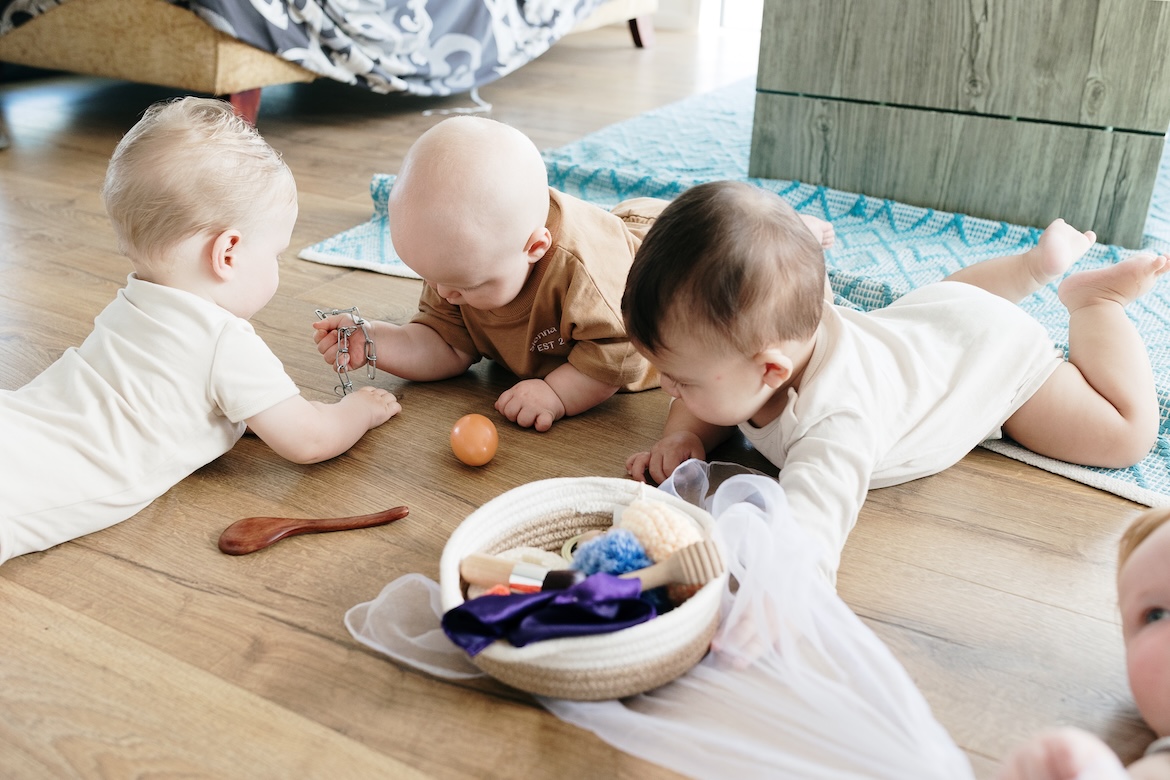
I saw how deeply they focused when given the simplest objects: a sphere, a metal cup, a scarf. No instructions. No right or wrong way to use it. Just space.
And in that space, something extraordinary happened. They didn’t need to be entertained. They became the creators.
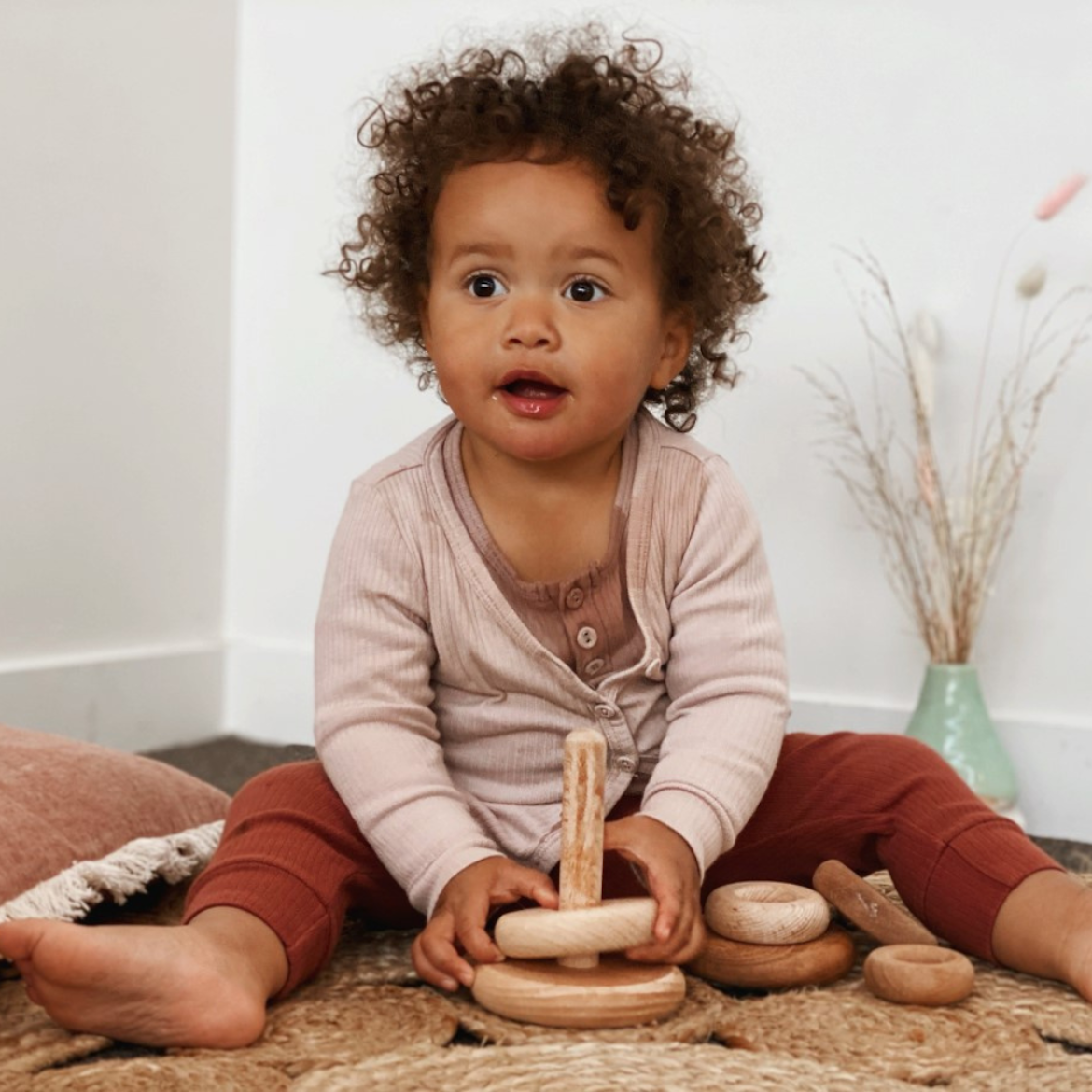
When Toys Do Everything, Children Do Less
Many modern toys are designed to perform for the child, to light up, sing, demonstrate, instruct. But when a toy does everything, the child does less.
And children are wired to do. To test gravity. To explore texture. To repeat actions.
To construct and deconstruct ideas.
When we simplify their environment, something remarkable happens. Their thinking expands. Their focus strengthens. Their nervous systems settle.
Open-ended, heuristic play doesn’t remove stimulation; it shifts the source of stimulation inward. The child becomes the creator rather than the consumer.
That shift builds focus, problem solving, resilience, creativity and emotional regulation. These are not aesthetic outcomes. They are neurological ones.
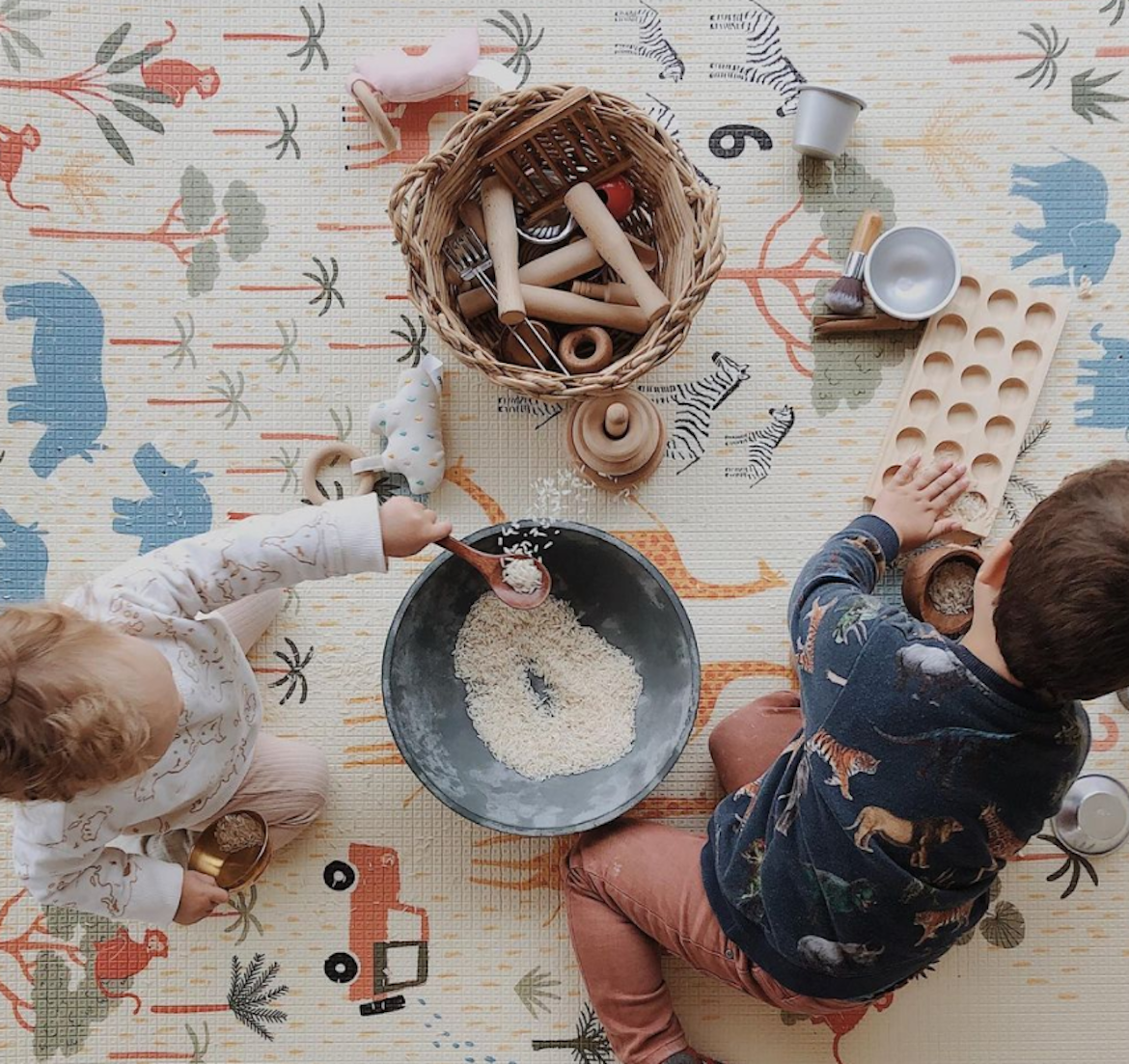
The Quiet Realisation That Became NavyBaby
NavyBaby was born from that quiet realisation.
It began at home. I started sourcing and curating pieces that aligned with the kind of childhood I wanted to nurture – objects with texture, weight, beauty and simplicity. Pieces that could be used in a hundred different ways depending on the child holding them.
At first, I was simply sharing what worked for us. And I realised something important: many parents are already thinking deeply about these things.
They notice the overwhelm. They see the shortened attention spans. They feel the busyness. They’re quietly wondering if there’s another way.
And when parents notice, they share amongst one another that:
“My child plays longer with fewer toys”.
“They seem calmer”.
“They’re more imaginative”.
“They’re not asking for constant entertainment”.
And almost always, there is relief in their voice. Because deep down, most parents instinctively know that childhood doesn’t need to be rushed or programmed. That children thrive when given space. Space to be bored, experiment, fail safely and space to think.
Choosing simple, intentional play is not about restriction. It’s about confidence that your child is capable without constant input.